AI singing voice generators have moved far beyond novelty. Today, creators can generate convincing vocals for AI covers, original songs, demos, games, and social content often without a microphone, studio, or vocal training. But with dozens of tools claiming “realistic AI vocals,” the real question becomes: which AI singing voice generator is actually the best for your needs?
This guide answers that question by explaining what AI singing voice generators are, reviewing 12 leading tools in depth, comparing them side by side, and helping you choose the right solution for your creative goals.
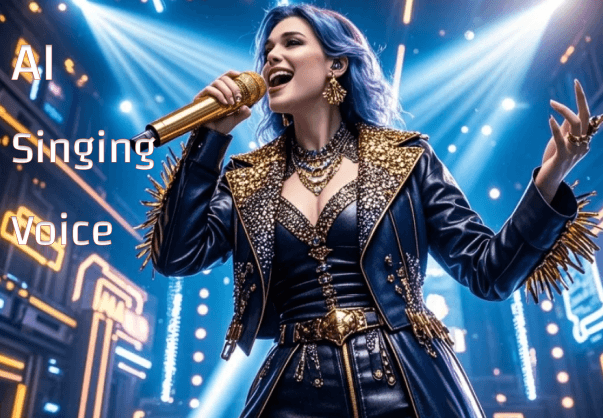
What Is an AI Singing Voice Generator?
An AI singing voice generator is a system that uses machine learning models—typically trained on large datasets of sung vocals, to synthesize pitched, expressive singing rather than plain text-to-speech. Unlike standard voice generators, these tools must handle:
- Pitch and melody accuracy
- Timing and rhythm
- Dynamics (soft vs powerful delivery)
- Expressive nuances (vibrato, breath, emphasis)
Depending on the platform, AI singing voice generators can be used for:
- AI song covers (changing the singer’s voice)
- Original songs (AI-generated vocals + music)
- Demo vocals for producers
- Content creation (short-form video, games, ads)
Modern tools range from simple, beginner-friendly interfaces to professional-grade vocal synthesis environments.
12 Best AI Singing Voice Generators (In-Depth Reviews)
Below are the 12 best AI singing voice generators, each evaluated for vocal realism, flexibility, ease of use, and practical use cases.
1. MusicSeed
Best for: Balanced AI singing voice generation for original songs
Overview
MusicSeed is an AI music creation platform designed to generate complete musical pieces, combining instrumental composition with AI vocals. Unlike tools that focus solely on voice conversion, MusicSeed emphasizes song-level coherence, making it ideal for creators who want finished tracks, not just vocal swaps.
Key strengths
- Text-to-music workflows
- Integrated AI vocals and composition
- Suitable for original songs and demos
- Clear commercial-use positioning
Limitations
- Less granular control over individual phonemes
- Best results require prompt iteration
Who should use it
Creators, indie musicians, and teams who want end-to-end AI song creation with vocals included.
2. Musicfy.lol
Best for: Quick AI voice transformations and covers
Overview
Musicfy.lol focuses on fast, accessible AI vocal generation. It’s often used for quick experiments, meme-style covers, and casual creative projects where speed matters more than fine control.
Key strengths
- Simple interface
- Fast processing
- Low barrier to entry
Limitations
- Limited advanced vocal control
- Less suitable for professional production
Who should use it
Casual creators, beginners, and users experimenting with AI voice covers.
3. Singing AI Voices
Best for: Pre-built AI singing voices
Overview
Singing AI Voices provides access to a library of ready-made AI vocal models, making it easy to apply a singing voice without training custom models.
Key strengths
- Pre-trained voices
- Simple setup
- Suitable for quick covers
Limitations
- Limited customization
- Voice variety depends on library size
Who should use it
Users who want fast results without configuring complex vocal parameters.
4. Voicemod
Best for: Real-time vocal effects and experimentation
Overview
Voicemod is primarily known as a real-time voice changer, but it also supports stylized vocal effects that can be adapted for musical experimentation.
Key strengths
- Real-time processing
- Strong community adoption
- Fun and interactive
Limitations
- Not built specifically for singing synthesis
- Limited realism for full songs
Who should use it
Streamers and creators experimenting with vocal effects rather than full songs.
5. ACE Studio
Best for: Professional AI vocal synthesis
Overview
ACE Studio targets musicians and producers seeking detailed control over AI vocals. It supports advanced parameters like pitch curves, pronunciation, and timing.
Key strengths
- High vocal realism
- Detailed editing tools
- Studio-grade workflow
Limitations
- Steeper learning curve
- Less beginner-friendly
Who should use it
Professional producers and serious musicians.
6. Music Creator
Best for: Simple vocal-assisted music creation
Overview
Music Creator combines basic AI music generation with vocal support, focusing on accessibility rather than deep customization.
Key strengths
- Easy to use
- Suitable for quick drafts
Limitations
- Limited advanced vocal features
- Less expressive output
Who should use it
Beginners and casual users are creating simple songs.
7. Lalals
Best for: Quick AI singing experiments
Overview
Lalals offers lightweight AI singing voice features designed for fast generation and testing ideas.
Key strengths
- Speed
- Minimal setup
Limitations
- Limited control
- Inconsistent vocal quality
Who should use it
Users looking for inspiration rather than production-ready vocals.
8. Voicestars
Best for: AI voice covers with recognizable styles
Overview
Voicestars emphasizes AI voice covers, often focusing on recognizable vocal timbres.
Key strengths
- Voice identity focus
- Popular for cover content
Limitations
- Legal and licensing considerations
- Less suitable for original vocals
Who should use it
Creators focused on cover-style content.
9. Controlla
Best for: Vocal parameter experimentation
Overview
Controlla allows users to adjust vocal parameters with more control than basic generators, although experimentation is required.
Key strengths
- Adjustable vocal parameters
- Flexible experimentation
Limitations
- UI complexity
- Smaller user base
Who should use it
Advanced users exploring vocal manipulation.
10. Mureka
Best for: Integrated AI music and vocal workflows
Overview
Mureka blends AI composition with vocal generation, offering a unified approach similar to end-to-end music generators.
Key strengths
- All-in-one approach
- Good for demos
Limitations
- Output consistency varies
Who should use it
Creators seeking integrated music + vocals without deep editing.
11. Audimee
Best for: Clean AI vocal generation
Overview
Audimee focuses on clarity and intelligibility, making it suitable for simple melodic lines and background vocals.
Key strengths
- Clean vocal output
- Easy workflow
Limitations
- Less expressive
- Limited stylistic depth
Who should use it
Users needing clean, neutral AI vocals.
12. Soundverse AI
Best for: AI-assisted music ideation
Overview
Soundverse AI supports music generation with vocal elements, positioning itself as an AI assistant for creative ideation.
Key strengths
- Idea generation focus
- User-friendly
Limitations
- Not specialized in singing realism
Who should use it
Early-stage creators brainstorming musical ideas.
Comparison Table: Best AI Singing Voice Generators
| Tool | Vocal Realism | Covers | Original Songs | Ease of Use | Commercial-Friendly |
|---|---|---|---|---|---|
| Musicfy.lol | Medium | Yes | Limited | Very Easy | Varies |
| MusicSeed | High | Yes | Yes | Easy | Yes |
| Singing AI Voices | Medium | Yes | No | Easy | Varies |
| Voicemod | Low–Medium | No | No | Easy | Limited |
| ACE Studio | Very High | No | Yes | Advanced | Yes |
| Music Creator | Medium | Limited | Yes | Easy | Varies |
| Lalals | Low–Medium | Limited | No | Very Easy | Limited |
| Voicestars | Medium | Yes | No | Easy | Varies |
| Controlla | Medium–High | Limited | Yes | Advanced | Varies |
| Mureka | Medium–High | Limited | Yes | Easy | Varies |
| Audimee | Medium | No | Yes | Easy | Varies |
| Soundverse AI | Medium | Limited | Yes | Easy | Varies |
How to Choose the Best AI Singing Voice Generator for You
Choosing the best tool depends on what you want to create.
- For original songs: MusicSeed, ACE Studio
- For professional vocal control: ACE Studio
- For fast covers: Musicfy.lol, Voicestars
- For beginners: MusicSeed, Music Creator, Soundverse AI
- For experimentation: Controlla, Lalals
Ask yourself:
- Do I need covers or original vocals?
- How much control do I want?
- Do I need commercial usage rights?
- How much time can I spend learning the tool?
Conclusion
AI singing voice generators have reached a point where they can meaningfully support real creative work. The “best” tool is not universal, it depends on whether you value speed, realism, control, or end-to-end song creation.
For creators seeking a balanced solution that combines AI vocals with music generation and a user-friendly workflow, MusicSeed stands out as a strong overall choice. For professionals who need maximum vocal precision, tools like ACE Studio excel. Meanwhile, simpler platforms serve casual experimentation and cover-style content well.
As AI vocal technology continues to evolve, these tools will only become more expressive and accessible. The best approach today is to treat AI as a collaborator—one that helps you turn ideas into sound faster than ever before.
🥇 Related Articles:
1. 8 Best Free AI Singing Voice Generators in 2026 (Top Tools)
2. AI for Music: 12 Best Tools for Songwriting, Vocals
3. 10 Best AI Melody Generators for Songwriters (2026)