Quick Take
- What happened: England players and fans sang Oasis’ “Wonderwall” after the 4-2 World Cup win over Croatia.
- Why it matters: The moment has turned England’s campaign into a Britpop-flavored music story.
- Camp detail: England’s setup has included vinyl records, player-selected songs and training-session music.
- Next test: The Ghana match will show whether “Wonderwall” becomes a one-night celebration or a recurring tournament sound.
- MusicSeed angle: A familiar song can become part of team identity when fans attach it to a shared result.
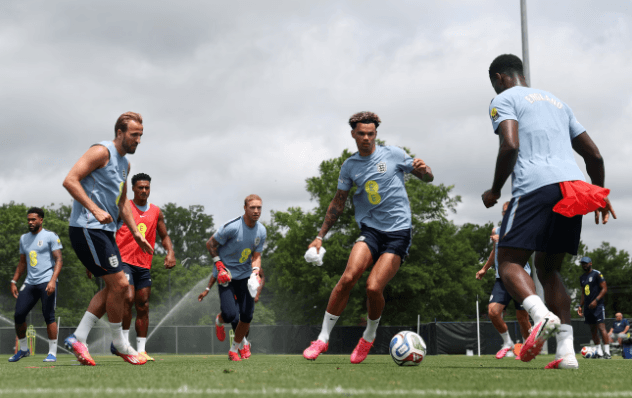
Image source: Eddie Keogh/The FA/Getty Images. Used for editorial reporting only; rights holder may request removal or credit correction.
England’s World Cup run has found an unexpected soundtrack.
After England beat Croatia 4-2 in their Group L opener, players and fans joined in with Oasis’ “Wonderwall,” turning a post-match celebration into one of the team’s clearest emotional images of the tournament so far.
For MusicSeed, that is the story worth watching. This is not just about England, Thomas Tuchel or a clever Britpop reference. It is about how songs become attached to sporting moments, how fans use music to turn results into memory and how one familiar chorus can give a World Cup campaign a recognizable sound.
Quick Answers for Fans
| User Question | Quick Answer |
|---|---|
| Why is England linked to “Wonderwall”? | Players and fans sang it after England’s 4-2 win over Croatia |
| What is “Britpop football”? | A music-flavored phrase around England’s energetic World Cup mood under Thomas Tuchel |
| Which band made “Wonderwall”? | Oasis |
| What music has appeared around England’s camp? | Vinyl records, player-selected songs and pitch-side training music |
| Who do England play next? | Ghana in Boston |
| Is “Wonderwall” England’s official World Cup song? | No. It is becoming a fan and team-culture moment, not an official song |
Why England’s “Wonderwall” Moment Is Getting Attention
England’s “Wonderwall” moment is getting attention because it feels bigger than a normal post-match song.
A team can win a game and move on. A crowd can sing a song and forget it by the next morning. But when players, fans and a coach share the same track after a major World Cup result, the song starts to carry the feeling of the campaign.
That is what happened after the Croatia win. “Wonderwall” gave England’s strong opening result an emotional afterimage. It was easy to sing, easy to clip and easy for fans to understand instantly.
The song also comes with cultural weight. Oasis are closely tied to British music memory, and “Wonderwall” has long lived beyond the album it came from. It is a stadium song, a pub song, a karaoke song and a nostalgia trigger. That makes it unusually easy for football fans to turn into a shared World Cup moment.
The reaction from inside the team also matters. Harry Kane has described the “Wonderwall” singalong as one of his favorite moments in an England shirt, which shows that the song has moved beyond background music and into the emotional center of the campaign.
What “Britpop Football” Means
“Britpop football” works because it turns England’s current World Cup mood into something fans instantly understand: loud, familiar, emotional and built for a singalong.
The phrase is playful, but it captures a real feeling around the team. Tuchel’s England are being framed not only through tactics, but through mood: high energy, direct connection and a visible attempt to bring players and supporters closer together.
That is why the music angle matters. A phrase like “Britpop football” gives fans a simple way to describe how the team feels, not just how it plays.
For England, that can be powerful during a tournament. World Cup campaigns often need more than good performances. They need symbols. They need moments people can repeat. They need a sound.
Right now, “Wonderwall” is giving England exactly that.
How Music Entered England’s World Cup Camp
The music story did not start only after the Croatia match.
Inside the England camp, the mood has reportedly included vinyl records and player-selected songs. A record player in the team hotel gave players a shared listening point, while pitch-side speakers at training brought a looser musical energy into the build-up.
The soundtrack has not been limited to Britpop. Reports have mentioned training-session music ranging from Dr Dre, Coolio and Tupac to Luther Vandross, showing that England’s camp sound is broader than one genre or one nostalgic reference.
That detail matters because World Cup camps can become repetitive and tense. Players move between hotels, training sessions, media duties and match preparation. Music helps break that rhythm. It gives the group a way to relax, reset and build identity away from the pitch.
The “Wonderwall” moment works because it sits inside that wider atmosphere. England are not just using one song after one win. They are building a tournament mood where music is part of the team’s daily environment.
Why “Wonderwall” Works as a Football Song
“Wonderwall” works for football because it does not need explanation.
The chorus is simple. The melody is familiar. The feeling is communal. In a stadium setting, those qualities matter more than musical complexity.
A football song has to survive noise, movement and emotion. It has to be easy enough for thousands of people to sing without thinking too hard. “Wonderwall” has that quality. It can sound messy and still work. In fact, that is part of its power.
England fans already have modern singalong history with tracks like “Sweet Caroline.” “Wonderwall” could play a different role. It feels more connected to English guitar music, 1990s nostalgia and the idea of a campaign finding its own rough-edged soundtrack.
That does not mean it will automatically become England’s song of the tournament. It means it has the right ingredients: familiarity, emotion, timing and a winning result attached to it.
Why the Ghana Match Matters for the Music Story
The Ghana match now becomes more than another Group L fixture for this music story.
England enter the game after beating Croatia 4-2, while Ghana also opened with a win over Panama. That gives the match real weight, but the music question is simpler: will “Wonderwall” return if England win again?
Because both teams opened with wins, the Ghana match gives the “Wonderwall” story a real test. Another England win could turn the song into a recurring tournament ritual, while a setback could quickly cool the Britpop mood.
If England beat Ghana and the song comes back after the match, the connection could grow stronger. Fans may start to expect it. Clips may spread again. The phrase “Britpop football” may feel like a real part of the campaign rather than a clever headline.
That is why Ghana matters here. It will test whether “Wonderwall” was a one-night celebration or the beginning of England’s tournament soundtrack.
The Bigger World Cup Music Pattern
England’s “Wonderwall” moment also fits a wider World Cup 2026 pattern.
This tournament has already been shaped by official songs, opening ceremony performances, Fan Festival lineups and artist-driven moments. But England’s Britpop story is different because it feels more organic.
It was not planned as the official soundtrack of the tournament. It was not built around a new release. It came from a team, a result and a crowd finding the same song at the right time.
Those are often the World Cup music moments that last. Official songs matter, but fan-adopted songs can become even more powerful because they feel earned. They grow from memory rather than marketing.
That is why “Wonderwall” is worth watching. It may not be new, but it has found a new setting.
What MusicSeed Readers Can Take Away
For MusicSeed readers, the takeaway is simple: songs travel further when people can attach them to a shared moment.
“Wonderwall” was already famous, but England’s post-match singalong gave it a fresh World Cup role. That is how music often works in sport. A match, a crowd, a win and a clip can change how people hear a song, even when the song itself is decades old.
For creators, this is a useful reminder: music is not only about release timing. It is also about participation. The songs people remember are often the songs they can sing, share and attach to something they lived through.
What to Watch Next
The next question is whether “Wonderwall” follows England through the tournament.
If the song returns after the Ghana match, it could become a real emotional thread for the team’s World Cup run. If England keep winning, the track may become one of the campaign’s defining fan sounds.
But World Cup music is fragile. It depends on timing, results and repetition. One bad night can change the mood. One big win can make a song feel permanent.
For now, England have something valuable: a familiar anthem, a shared player-fan moment and a music identity that feels different from the usual tournament script.
Whether “Britpop football” becomes a lasting World Cup story depends on what happens next.
Source Note
This article is based on The Guardian’s reporting on England’s World Cup camp, vinyl records, training music and “Britpop football” mood, plus Reuters reporting on England’s build-up to the Ghana match. MusicSeed shaped the story around music culture, fan emotion and how songs become part of World Cup identity.

