Quick Take
- What happened: The music video for “Follow Me,” a World Cup-linked collaboration featuring JIHYO, French Montana, LUDMILLA, Adriana C and RedOne, has sparked backlash online.
- Why fans reacted: Many listeners praised the song and JIHYO’s vocals but criticized the video’s heavy use of AI-generated visuals.
- Important note: “Follow Me” is being discussed around World Cup 2026, but it should be described as World Cup-linked unless FIFA officially confirms a formal anthem label.
- Why it matters: The reaction shows that fans are not rejecting AI itself. They are rejecting AI when it looks like a shortcut.
- MusicSeed angle: AI can support music videos, but it still needs human taste, strong editing and respect for the artists on screen.
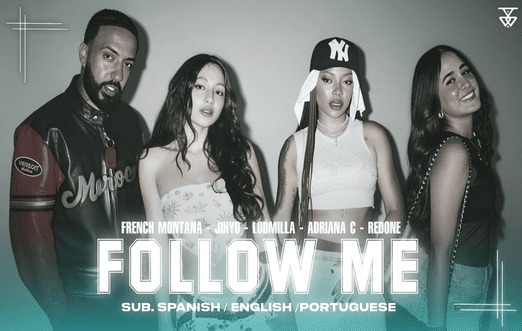
Image source: JEY / YouTube. Screenshot from the “Follow Me” music video page. Used for editorial reporting only; rights holder may request removal or credit correction.
The music video for “Follow Me,” a World Cup-linked collaboration featuring TWICE’s JIHYO, French Montana, LUDMILLA, Adriana C and RedOne, is drawing backlash for its AI-heavy visuals even as fans praise the song and JIHYO’s vocals.
The track brings together K-pop, hip-hop, Brazilian pop and global dance production around the World Cup 2026 atmosphere. On paper, it has the ingredients of a global sports-music moment: a multi-country artist lineup, a football theme and RedOne, a producer with a long history in large-scale pop collaborations.
But the conversation around the release has quickly moved beyond the song.
For MusicSeed, this is the real story: “Follow Me” shows that AI is not automatically a problem in music videos. The problem begins when AI visuals feel rushed, generic or disconnected from the artists fans came to see.
Quick Answers for Fans
| User Question | Quick Answer |
|---|---|
| What is “Follow Me”? | A World Cup-linked global pop collaboration featuring JIHYO, French Montana, LUDMILLA, Adriana C and RedOne |
| Why is JIHYO trending? | Fans praised her vocals and presence in the track |
| Why is the video being criticized? | Many viewers felt the AI-generated visuals looked underproduced for a project of this scale |
| Is “Follow Me” the official FIFA World Cup anthem? | It is safer to call it World Cup-linked unless FIFA officially confirms that label |
| What is the bigger issue? | Fans still expect strong visual direction, artist focus and human creative taste |
| Why does this matter for MusicSeed readers? | It shows the difference between using AI creatively and using AI as a shortcut |
What Happened
“Follow Me” was released as a World Cup-linked global collaboration led by RedOne.
The track features French Montana, TWICE’s JIHYO, Brazilian singer LUDMILLA, rising artist Adriana C and RedOne himself. The project connects multiple music markets at once, from K-pop and Latin pop to hip-hop and global dance production.
The song also leans into football culture, with the video connecting the track to World Cup 2026 energy and global sports imagery.
That should have made the release feel like a polished international event single. Instead, much of the online discussion has focused on the video’s AI-generated visual style.
Fans did not simply reject the song. Many separated the music from the video, praising the track’s energy and JIHYO’s performance while criticizing the visual execution.
Why Fans Praised the Song but Criticized the Video
The fan reaction has been split in a very specific way.
On the music side, “Follow Me” has obvious crossover appeal. It is bright, direct and built around a global celebration mood. JIHYO’s vocals gave the song a clear pop anchor, and her appearance helped bring TWICE’s international fanbase into the conversation.
The video received a much colder response.
The main criticism is that the AI-heavy visuals did not match the scale of the collaboration. Viewers expected a sharper global music video with stronger artist presence, cleaner visual direction and more intentional world-building. Instead, many felt the generated look made the project feel cheaper than the song itself.
That difference matters. This is not an anti-AI backlash. It is a quality backlash.
Fans are not saying AI can never appear in music videos. They are saying that a high-profile music project needs more than generated spectacle. It needs taste, pacing, editing, artist framing and emotional connection.
What the Backlash Really Means
The “Follow Me” backlash is not only about one video.
It reflects a larger shift in how audiences judge AI-generated visuals. A few years ago, AI imagery still had novelty value. Viewers might watch simply because the video looked unusual or futuristic. That novelty is fading.
Now fans are asking a more practical question: does the AI actually improve the video?
For a World Cup-linked song, the standard is even higher. Sports music needs movement, emotion, people and cultural energy. It should feel like celebration. If the visuals look detached from the artists or too obviously generated, the video can lose the human feeling that makes global event songs work.
That is why the criticism matters. Fans may accept AI in the creative workflow, but they still want the final result to feel intentional.
AI can help with scale. It can help create environments, mood boards, animated worlds or fast visual drafts. But if the final edit feels generic, audiences will see the tool before they feel the song.
Why the “Official Anthem” Label Needs Care
The wording around “Follow Me” needs to be handled carefully.
Some posts and headlines have described the song as a World Cup anthem. But unless FIFA officially confirms that label, the safer and more accurate description is “World Cup-linked,” “World Cup-themed” or “released around World Cup 2026.”
That distinction matters for music reporting.
A song can support the World Cup mood without being the official FIFA anthem. It can still be culturally relevant, fan-driven and connected to the tournament without carrying an official label.
For MusicSeed, the safest approach is clear: describe “Follow Me” as a World Cup-linked global collaboration unless an official FIFA source confirms otherwise.
Why This Matters for JIHYO and K-Pop Fans
JIHYO’s involvement is one of the strongest reasons the story gained attention.
As a member of TWICE, she brings a global K-pop audience that pays close attention not only to vocals, but also to visual presentation. For K-pop fans, an artist’s screen time, styling, editing and performance framing are not minor details. They are part of how the artist’s value is communicated.
That is why the video criticism became stronger.
Fans were not only reacting to AI visuals in general. Many were reacting to how those visuals affected the way the artists were presented. When a collaboration includes a performer with JIHYO’s fanbase and reputation, the visual direction has to feel polished enough to match the scale of her participation.
A global crossover project can gain attention from K-pop fans quickly, but it also inherits their expectations. The song can be catchy, but the video still has to respect the artist’s presence.
What This Means for AI Music Videos
The reaction to “Follow Me” offers a useful lesson for future AI-assisted music videos.
AI should not be treated as a replacement for art direction. It works best when it supports a clear creative idea: a specific mood, a consistent world, a strong visual rhythm and a better way to present the artist.
When AI becomes the main identity of the video without enough human control, the result can feel hollow.
This is especially risky for event-driven music. A World Cup-linked track is supposed to feel global, emotional and communal. It should make viewers feel like they are part of a larger moment. If the visuals feel too synthetic or disconnected, that emotional bridge becomes weaker.
The strongest AI-assisted music videos will not be the ones that use the most generated imagery. They will be the ones where the technology disappears into the creative direction.
What MusicSeed Readers Can Take Away
For MusicSeed readers, the takeaway is simple: AI is a tool, not the taste-maker.
A creator can use AI to brainstorm visuals, build concept art, test scene ideas or speed up production. But the final result still needs human judgment. Someone has to decide what fits the song, what flatters the artist, what feels emotionally clear and what should be removed.
“Follow Me” shows what happens when fans feel that judgment is missing.
The song may still find an audience because of its lineup and World Cup-linked energy. But the video backlash proves that listeners can separate a strong track from weak visual execution.
For creators, that is important. AI can help you make more. It does not automatically help you make better.
What to Watch Next
The next question is whether the backlash changes how future World Cup-linked music videos use AI.
If “Follow Me” keeps spreading through JIHYO’s fanbase, RedOne’s name and the global artist lineup, the song may continue to travel beyond the video criticism. But the AI backlash is now part of the release story.
For future sports songs, labels and creators may need to be more careful. AI visuals can add scale, but major event music still depends on human presence, performance and emotional trust.
A global song needs more than spectacle. It needs a visual world that makes the artists feel larger, not smaller.
Source Note
This article is based on public reporting about RedOne’s “Follow Me” collaboration, its artist lineup, the release of its music video and fan criticism of the video’s AI-generated visuals. MusicSeed describes the track as World Cup-linked rather than an official FIFA anthem unless FIFA officially confirms that label. MusicSeed shaped the story around AI video quality, music production, fan response and how global sports songs are presented visually.

