Quick Take
- What happened: South African music veteran Oskido joined the debate around AI music and its impact on artists.
- Core view: AI should support artists as a creative tool, not replace human musicians.
- Why it matters: AI song generators are making music creation faster and more accessible, but they also raise questions about originality, copyright and artist discovery.
- Creator takeaway: The future of AI music should be human-led, with artists using tools to support ideas while keeping emotion, culture and judgment at the center.
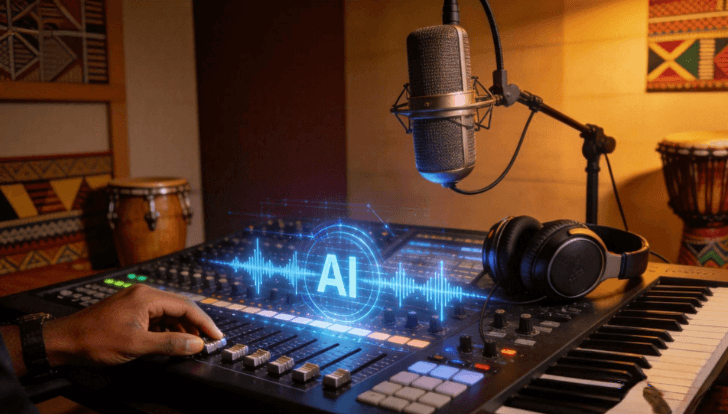
South African music veteran Oskido has added his voice to the AI music debate, and his message is clear: AI can support creativity, but it should not replace the human experience behind music.
His view lands at a time when AI-powered music tools can generate melodies, lyrics, vocals and full songs within minutes. That speed raises a harder question for artists: if music becomes faster to make, what still makes human creativity irreplaceable?
What Oskido’s AI Music View Means
Oskido’s view matters because the AI music debate is no longer only a Silicon Valley or major-label issue. It is reaching artists and producers in African music markets, where sound is often deeply tied to rhythm, language, dance culture and community identity.
In music scenes shaped by local rhythm and cultural memory, AI may imitate a pattern, but it does not automatically understand why that pattern matters.
That is the real point. AI can help with speed, demos and production support, but the artist still brings intention, taste, lived experience and cultural context.
AI Music Is Changing Song Creation
AI music tools have lowered the barrier to making songs. Users can describe a mood, choose a style direction and generate lyrics, vocals, melodies or full song drafts with little traditional training. That opens doors for beginners, independent creators and producers who want faster idea testing.
But easier creation also creates pressure.
If platforms become crowded with fast, low-cost AI tracks, it may become harder for listeners to find human artists with original voices. BONA’s coverage also points to concerns that AI-generated songs are becoming harder to distinguish from human-made music, while some artists worry that emerging musicians could find it harder to break through.
What AI Still Cannot Replace
The most important point is simple: music is not only output.
AI can generate a beat, a topline or a vocal texture. But it cannot automatically generate the memory behind a lyric, the emotional timing of a performance, the social meaning of a local rhythm or the cultural weight of a sound.
That is where human creativity still matters.
For MusicSeed-style creators, the best use of AI is not “let the machine replace the artist.” It is using AI to turn rough ideas into demos, test different moods, explore arrangements and speed up early production while keeping the human artist in control.
Copyright, Credit and Discovery Are Still Open Questions
The debate is also about ownership. Artists and labels continue to question how AI systems are trained, whether copyrighted music is being used without permission, and how creators should be credited or compensated if their work contributes to AI-generated output.
Discovery is another concern. If AI music grows at scale, platforms may need clearer systems for labeling, ranking and recommending songs so real artists are not buried under generic output.
What Creators Should Take Away
The best takeaway is not “avoid AI” or “let AI do everything.”
The better path is human-led AI music creation. Creators can use AI to sketch ideas, build demos, test hooks, explore genres and speed up production. But the final judgment should still come from the artist.
The key question should always be:
Does this song say something worth hearing?
That is why Oskido’s view feels timely. AI music may change how songs are made, but the value of music still depends on human taste, culture, emotion and intent.
Source Note
This article is based on public coverage of Oskido’s comments on the AI music debate. MusicSeed shaped the story with an artist-focused angle, highlighting human creativity, copyright, discovery and the role of AI tools in music creation.

