Quick Take
- What happened: Phoebe Bridgers brought her no-phone pop-up rollout to Madison Square Garden, with tickets priced from $1 to $20.
- Why it matters: The campaign makes new music feel rare by keeping it mostly offline.
- Music angle: Mystery flyers, Yondr pouches and fan clue-hunting are turning the rollout into both a live music event and an online conversation.
- What to watch: The bigger question is whether limited access can become a stronger music rollout strategy than constant online exposure.
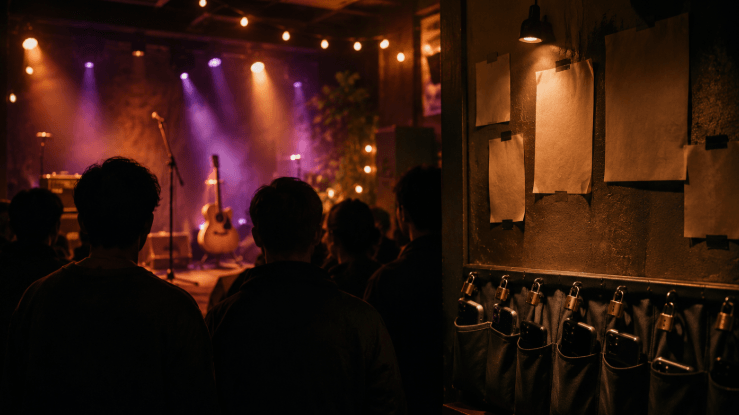
Phoebe Bridgers is making fans talk more by letting them record less.
Her no-phone pop-up rollout has turned mystery flyers, locked-away phones and a low-cost Madison Square Garden show into one of the most unusual music marketing stories of the moment. Tickets for the June 4 MSG show were priced from $1 to $20, with proceeds benefiting the Community Justice Exchange’s Immigration Bond Freedom Fund.
What Happened
Bridgers has been playing surprise pop-up shows built around mystery, scarcity and limited access. WIRED reported that the rollout includes mysterious flyers, phone-free shows, Yondr pouches and fans working together online to decode possible show clues and album hints.
The campaign began with smaller shows before scaling up to Madison Square Garden. At her May 8 Roswell, New Mexico show, Bridgers performed her first solo show since 2023, played multiple new songs and showed a short video previewing a forthcoming but still TBA third album. Attendees also received small pieces of a painting in the pouches used to lock away phones, which fans speculated could connect to future album artwork.
That makes this more than a concert announcement. It is a rollout strategy built on the feeling that the new music can only be fully experienced in the room.
How the No-Phone Rollout Works
| Rollout Element | Why It Works |
|---|---|
| Mystery flyers | Turns announcements into clues instead of standard promo posts. |
| No-phone shows | Keeps unreleased music from spreading instantly online. |
| Yondr pouches | Makes the live room feel private and harder to copy. |
| Low-cost MSG tickets | Turns a major venue into an accessible fan event. |
| Online clue-hunting | Lets fans keep the story moving even without concert footage. |
The unusual part is that the rollout is offline at the point of experience, but very online afterward. Fans cannot easily post the new songs, so they discuss the clues, the locations, the artwork and the meaning of the rollout instead. WIRED described the limited information around the shows as turning the campaign into a community detective project.
Why Scarcity Is the Real Hook
Most music rollouts are built for instant visibility. Artists post snippets, fans record shows, clips spread on TikTok and the internet does the rest.
Bridgers is working against that habit. By limiting recordings, the shows make attendance feel more valuable. Fans can describe the songs, compare clues and talk about the atmosphere, but they cannot easily turn unreleased music into viral clips before the artist is ready.
That scarcity is the hook. In a music culture where almost everything becomes content within minutes, “you had to be there” suddenly feels powerful again.
What Artists Can Learn
Bridgers’ rollout works because it combines three things: scarcity, community and timing.
Scarcity makes the shows feel special. Community turns the rollout into a shared puzzle. Timing keeps the story moving because fans receive new hints instead of one full announcement.
The lesson is not that every artist should hide their music. The lesson is that a rollout works better when fans feel invited into a moment, not just targeted by another promo cycle.
For artists, that matters. Music marketing does not always need more content. Sometimes it needs a stronger reason for fans to care.
What to Watch Next
The biggest question now is whether the no-phone rollout leads to a larger album announcement. Pitchfork reported that Bridgers debuted multiple new songs at the Roswell show and previewed a forthcoming third album, though full album details remain unannounced.
For now, the campaign is already working as a music-culture story. Bridgers has turned mystery flyers, low-cost tickets and phone-free rooms into a reminder that hype does not always come from being everywhere online.
In a music cycle built around constant access, Bridgers is showing that mystery can still move faster than clips.
Source Note
This article is based on public music reporting about Phoebe Bridgers’ recent pop-up shows, Madison Square Garden event and phone-free rollout strategy. MusicSeed shaped the story with a music marketing and live-music trend angle.

